


Why Do We Respect the Philosopher-Warrior More Than Either Alone?
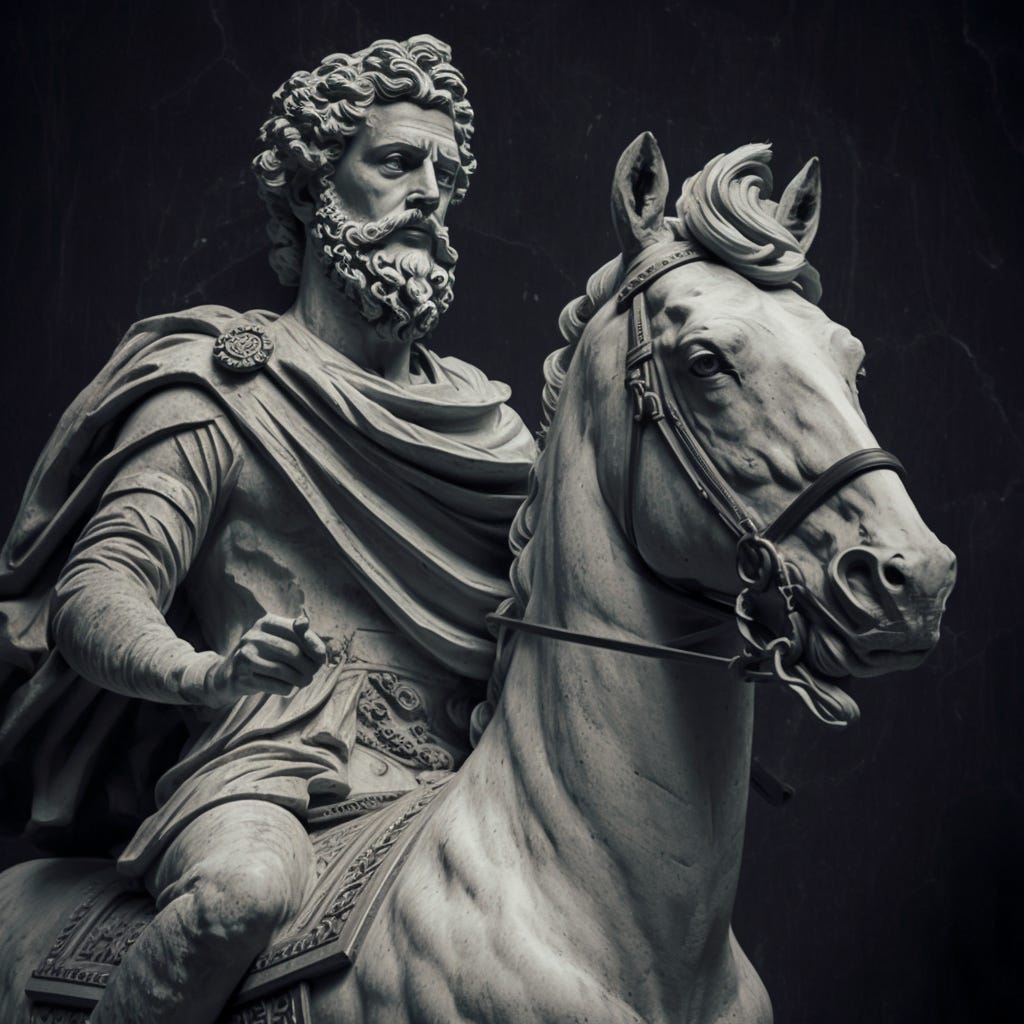
Why do we respect men like Marcus Aurelius or Miyamoto Musashi more than either the pure philosopher or the pure warrior? What does the combination produce that neither can alone?
Could it be that their philosophy emerged FROM action, not despite it?
Marcus didn’t philosophize instead of ruling and fighting—he philosophized about ruling and fighting while doing both. He fought Germanic tribes by day and pondered Stoic ethics by night. The fact that his philosophy was forged in a tent during wartime, not in an Athenian garden, gives it a different weight.
Maybe it was the physical danger that clarified their thinking.
Proximity to danger and death strips away abstraction. Anyone who has stepped into the ring—whether for a wrestling, jujitsu, or boxing match—understands this exact sensation. When it’s only you and your opponent in front of you, there is NOTHING else on your mind other than DON’T DIE!
Miyamoto Musashi (1584–1645)
Undefeated in 61 duels. Killed his first opponent at age 13. Then became a master painter, calligrapher, and sculptor. Wrote The Book of Five Rings on strategy and Dokkōdō (The Way of Walking Alone) on life philosophy. His ink paintings are considered national treasures in Japan.
I think if we were to ask these legends today whether they saw a contradiction in their persona—or what some would call their “niche“—they would have been baffled. Our modern assumption that intellectuals are soft and warriors are dumb is a recent phenomenon, afforded to us by our comfortable lifestyles.
These warriors’ sophistications weren’t decorative. Musashi didn’t paint because warriors should have hobbies. He painted because the same principles—presence, economy, decisiveness—governed both the sword stroke and the brush stroke.
The Pure Sophisticate: All Theory, No Skin in the Game
Before we dive into what the Sophisticated Savage looks like, let’s be clear about what he’s not.
Let’s talk about the pure sophisticate. The all-theory-no-action intellectual. The guy who’s read every book on courage and watched every video on YouTube about fight technique but has never once felt his heart pound before doing something that actually scared him.
You know this guy. Maybe you’ve been this guy. I know I have.
He’s got opinions on everything. He can endlessly quote Alex Hormozi and Naval at the office. He always seems to be “working on himself,” but that work somehow never involves sweating, bleeding, or risking anything real. His self-improvement exists entirely in his head and inside his journal.
He theorizes about what it means to live fully... from his couch.
He critiques the “system” and talks about what’s wrong with society... but has never built anything himself.
He knows exactly what other people should do with their lives.
History’s Armchair Philosophers
History is littered with these men. And here’s what’s interesting—we remember their ideas, but we don’t admire them. Not really. Not the way we admire the philosopher-warriors.
Jean-Paul Sartre wrote endlessly about freedom, resistance, and radical responsibility. “Man is condemned to be free,”he declared. “We are our choices.” Pretty bold, I’d say... Revolutionary, even.
Where was Sartre during the actual French Resistance? Parisian cafés, mostly. Writing plays. While others were dying for the freedom he theorized about, Sartre was chain-smoking and debating existentialism with his intellectual circle. His biographers have documented how he largely avoided any real risk during the Occupation. He wrote about resistance. He didn’t resist.
Then there’s Jean-Jacques Rousseau—the man who wrote Emile, one of the most influential books on education ever published. A treatise on how to raise children to become free, virtuous, natural men.
Rousseau had five children.
He abandoned every single one of them to The Paris Foundling Hospital, which meant almost certain death for his offspring. Didn’t raise a single child. Didn’t even try. The man who literally wrote the book on fatherhood and education couldn’t be bothered to father or educate his own kids.
This isn’t ancient gossip. Rousseau admitted it himself in his Confessions.
He regarded children as a considerable inconvenience; abandoning them was a socially acceptable way to relieve oneself of it. Problem solved.
Let that sink in. The guy whose theories on child-rearing shaped Western education for centuries... was a deadbeat dad. His philosophy floated completely free of his actual life.
This is the cost of sophistication without savagery. Of theory without skin in the game.
You Can Feel When a Man Has Never Been Tested
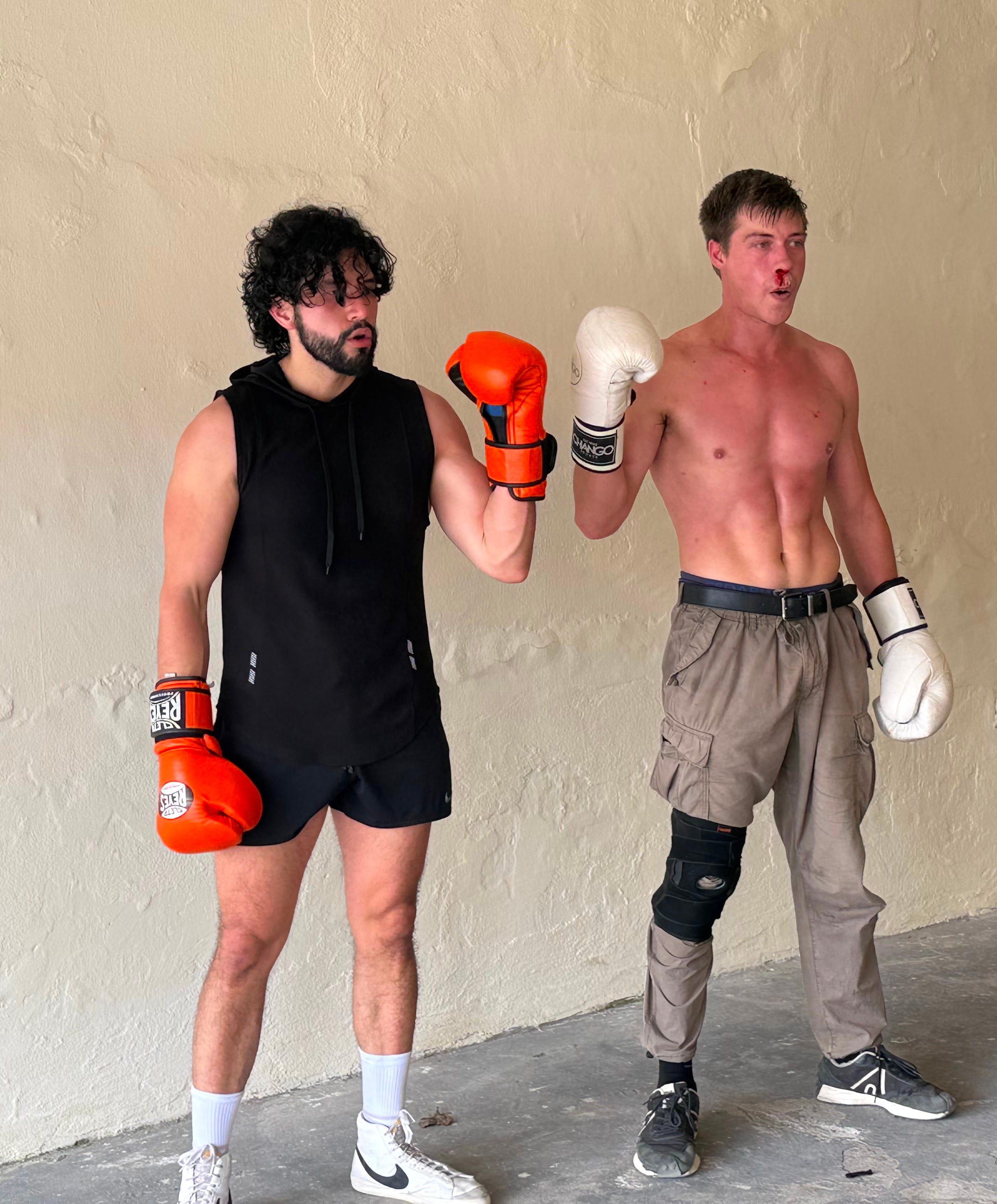
And here’s something I’ve noticed after years of boxing sparring rounds and wrestling competitions: you can feel when a man has never been tested.
It’s hard to articulate. It’s not about size or muscles or how loud he talks. It’s something subtler. An energy that’s missing. A groundedness that isn’t there. When you’ve been in the ring, when you’ve had your will tested against another man’s will, you develop a kind of radar for it. You meet a guy and something just feels... off. Hollow. Like there’s no weight behind his words.
You don’t feel that quiet confidence—or what Gen-Z likes to call “Aura“—that radiates from a man who knows what he’s capable of because he’s actually had to find out.
Women sense this too. They can’t always explain it, but they feel it instantly. They call it “the ick...” That unexplainable recoil from a man who should be attractive on paper but somehow isn’t. Often, what they’re sensing is this exact disconnect—a man who has never inhabited his own body, never tested himself, never earned the right to the confidence he’s performing.
This disconnect always shows.
Maybe not immediately. Maybe not overtly. But something rings hollow in the words of a man who has never tested his ideas against reality. His opinions feel weightless. And on some primal level, people can tell.
Nassim Taleb calls this the “Intellectual Yet Idiot”—the credentialed class that can theorize about risk but has never taken one. Who can explain economics but has never made a payroll. Who has opinions on violence but has never been punched in the face.
There’s a reason you’ve never seen a motivational video in your YouTube feed featuring Sartre or Rousseau.
Nobody’s making TikTok edits of Rousseau quotes set to the same lame Interstellar/Inception theme music.
No one’s getting Jean-Paul Sartre tattooed on their forearm... or at least no one I personally know... thank God...
We don’t admire them. We study them, sure. But admiration? Inspiration? That we reserve for men who lived their philosophy. Who bled for their ideas. Whose theories were forged in action, not invented to avoid it.
Meanwhile, the Marcus Aurelius quotes keep going viral. Miyamoto Musashi keeps selling books 400 years after his death. Bob Ross—a drill sergeant nicknamed “Bust ‘em up Bobby” who spent 20 years as a drill sergeant screaming at recruits before picking up a paintbrush and speaking in the softest voice television had ever heard—keeps getting millions of views on YouTube, long after he passed.
Because we can feel the difference between a man who wrote about courage because he had to summon it daily... and a man who wrote about courage because it made him sound interesting in some lame Twitter thread or at a dinner party.
The Real Cost of Living in Your Head
The pure sophisticate mistakes knowing for being. He thinks that because he’s read about discipline, he has discipline. Because he’s studied courage, he is courageous. Because he can articulate what a good life looks like, he’s living one.
He’s not.
He’s hiding.
Because here’s the uncomfortable truth: consuming content about self-improvement is often just sophisticated procrastination. Reading another book on productivity instead of doing the work. Watching another video on confidence instead of doing the thing that terrifies you. Building an identity around knowing stuff so you never have to face the fact that you haven’t done anything.
The pure sophisticate has a bias against action because action is where you can fail. Theory is safe. In your head, your business is always successful. Your confrontations always go perfectly. You always say the right thing.
Reality is where you find out what you’re actually made of.
And that’s terrifying.
So he stays in his head. Keeps reading. Keeps theorizing. Keeps “preparing” for a life he never starts living.
Meanwhile, his body softens. His courage atrophies. He becomes—exactly as Plato warned 2,400 years ago—“melted and softened beyond what is good.”
We don’t need more armchair philosophers.
We need the Sophisticated Savage.
Plato’s Answer: Train Both the Body and the Soul
Twenty-four hundred years ago, Plato solved a problem we’re still fumbling with today.
He was designing his ideal society in The Republic, and he arrived at a question that should haunt every modern man: How do you educate someone to be both dangerous and good?
His answer was elegant. You train both the body and the soul—simultaneously, from childhood. Not one then the other. Both.
Plato believed Utopia must begin in the body of man. The first ten years of education should be devoted to athletics and physical training because—and this is crucial—you cannot lead a nation of unhealthy and incapable citizens.
But Plato wasn’t building an army of brutes either. He believed musical education was equally necessary because music taught the soul harmony and rhythm—and even a disposition toward justice. His question rings across the centuries: “Can he who is harmoniously constituted ever be unjust?”
Plato believed that learning to feel rhythm, to sense when notes resolve and when they clash, to understand tension and release in a melody... this trained something deep in the psyche. Something that later recognized harmony and disharmony in life itself. In relationships. In decisions. In one’s own character.
He called this μουσική (mousikē)—and it encompassed far more than what we call music today. It included poetry, literature, drama, and all arts governed by the Muses. This was training for the inner life. Paired with γυμναστική(gymnastikē)—training for the physical life.
Plato didn’t see these as separate departments. He saw them as two expressions of the same education. The same discipline that teaches your body to endure teaches your soul to persist. The same sensitivity that hears dissonance in music feels it in an unjust act.
“He who mingles music with gymnastics in the fairest proportions, and best attempers them to the soul, may be rightly called the true musician and harmonist in a far higher sense than the tuner of the strings.”
— Plato, The Republic
The Mere Savage: Strong but Incomplete
Pure gymnastikē. All body, no refinement.
This is the guy who can deadlift 495 pounds but has never read a book that made him uncomfortable. Who can throw a punch but can’t articulate why he’s angry. Who has physical power but no internal compass for how to wield it.
He’s capable of violence but not of creation. He can destroy but cannot build. Strong but not wise.
Plato saw this man as unfit to rule—or even to advise those who rule. His “ferocity and hardness” make him dangerous in the wrong way. He’s a weapon without a wielder. A body without a soul steering it.
You’ve met this guy. Maybe at the gym. Maybe in a bar. He’s intimidating until he opens his mouth. Then you realize there’s nothing behind the muscle. No depth. No reflection.
He’s half a man pretending to be whole.
The Mere Sophisticate: Wise but Weak
“The exclusive devotion to gymnastic produces a sort of ferocity and hardness, and the exclusive devotion to music renders men softer and weaker than is good for them.”
— Plato, The Republic
Pure mousikē. All theory, no capacity.
This is Rousseau abandoning his children while writing treatises on fatherhood. Sartre theorizing about resistance from the safety of a café. The modern “intellectual” who can critique capitalism but has never built—or at least started—a company. He can explain power dynamics but has never been in a fight. He has opinions on everything and has risked nothing.
He critiques the world from a chair. Understands harmony intellectually but has no vitality to act on it. He’s “melted and softened beyond what is good.”
His body is an afterthought—a vehicle to carry his brain from coffee shop to bookstore. He’s never felt the primal satisfaction of physical exhaustion, never learned what his body can actually do under pressure, never discovered who he becomes when things get hard and there’s no more thinking to be done.
He’s also half a man pretending to be whole.
And here’s the uncomfortable part: the pure sophisticate is often more dangerous than the pure savage. The brute only damages what’s in front of him. The ungrounded intellectual can damage entire generations with ideas he never had to live by.
At least the savage has skin in the game.
The Sophisticated Savage: The Integrated Man
Now we arrive at the integration. The man Plato was actually trying to build.
The Sophisticated Savage isn’t a balance in the sense of doing a little of each—an hour at the gym, an hour with a book, checkbox complete.
That’s not integration. That’s scheduling.
Real integration means the physical and the intellectual inform each other. They become inseparable.
Physical capability grounds philosophy in reality. When you’ve actually been exhausted, actually been hit, actually pushed your body past what your mind said was possible—your philosophy changes. You stop theorizing about discipline and start knowing it in your bones. You stop having opinions about courage and start understanding it as a felt experience.

Aesthetic training elevates action beyond mere survival. When you’ve learned to create beauty—whether through music, writing, craft, or any art—you develop an acute sensitivity. You start caring about how things are done, not just whether they get done. Your actions gain a quality that pure pragmatism can never achieve.

And the harmony Plato speaks of emerges: an internal rhythm between doing and thinking. Between the body’s wisdom and the mind’s vision. Between the capacity for violence and the cultivation of peace.
This is the man who can fight but chooses not to—not from weakness, but from genuine understanding of what violence costs. This is the man who can build and create, not just analyze and critique. This is the man whose philosophy has been tested by friction with reality.
He’s not half a person anymore.
He’s complete.

So…how to you become a Sophisticated Savage?
How do we encapsulate this paradoxical yet complementary ideal in our lives?
“Courage and gentleness”—the combination that seems all too rare in this modern era.
Now, I don’t think it’s realistic to try and replicate Plato’s vision of his Utopia in The Republic by taking our young boys away from their mothers at the age of 10 and throwing them into a sort of Ivy League Boot Camp where they spend all day training, sparring, playing music, and studying philosophy for the first decade of their lives.
But perhaps we could throw ourselves into our own modern version of warfare and harmonious education?
The Sophisticated Savage Isn’t a Destination
Start that business. Join that local MMA gym. Pick up that instrument collecting dust in your closet.
You don’t need to enlist and get deployed overseas to become a modern-day Sophisticated Savage. I think simply entering the arena of life and taking actions that require genuine courage—entrepreneurship, creating content for the world to scrutinize, willingly walking into a fight gym to get punched in the face—this is enough. It might pale in comparison to Marcus on the Danube frontier or Musashi slicing through 61 duels. But the inner confidence and peace you develop will make you unrecognizable to who you were six months ago.
Business is hard.
Combat is hard.
Creating and sharing your ideas with the world is hard.
But if you were to ask me what’s harder?
Watching life pass you by. Never developing the courage to have those hard conversations. Never taking that leap of faith. Never feeling comfortable in your own skin because you’ve never tested what you’re actually made of.
The Sophisticated Savage isn’t a destination. It’s a direction. And the opposite isn’t being “average”—the opposite is being half a person. All theory and no skin in the game. Or all action with no reflection on what you’re building or why.
Both are ways of hiding.
A Note from the Walking Pad
I’m not writing this from some mountaintop, by the way. I’m writing this on my walking pad + standing desk setup in my studio while in the middle of taking another big financial risk scaling my online Creative Talent Management Agency. Some weeks I’m all savage—grinding, building, fighting & training with my coach—and I forget to read, to reflect, to sit with anything longer than an Instagram caption. Other weeks I’m all in my head, theorizing about “the good life” instead of actually living it.
Maybe Plato wasn’t describing two separate educations—athletics and music. Perhaps he was describing one education with two expressions. The same discipline that gets you to the gym at 5am gets you to the blank canvas. The same person who learns to throw a punch learns when to hold back from throwing it. The savage and the sophisticate aren’t taking turns. They’re the same person.
Somewhere right now, there’s a guy reading Meditations or The Book of Five Rings on his phone between rounds at a Muay Thai gym in Bali. There’s a CEO out there building a company during the day and learning piano at night—not because it’s “productive“ but because something in him needs to create beauty, not just value.
They’re not trying to be philosopher-warriors or even philosopher-kings.
They’re just refusing to be incomplete.
Welcome to the Sophisticated Savage Club.