


Life is actually amazing, and this is the most incredible time to be living right now.
But you wouldn’t know that (and you definitely wouldn’t feel that sentiment) if you were plugged in and connected to social media all day.
The Algorithm Wants You Scared
These days the algorithm is flooding my timeline with Epstein files drama, World War 3, advancements in AI that will supposedly replace 90% of the workforce because it can do all these wonderful things, yet there’s still no real-world examples or proof of any of these incredible “1 person, $100 million, 100% AI” startup companies.
And yes, I’m also not ignorant of the fact that right now we’re dealing with the highest levels of inflation, political scandals, mental health problems, low birth rates, and a global migration crisis…fuck… you name it. But in terms of opportunity, it’s hard to argue that right now is not the best time to be alive.
However, mainstream media wouldn’t have you believe that. It would rather have you scared, pessimistic, and glued to the TV, continuing to tune in to their fear-mongering doomer program.
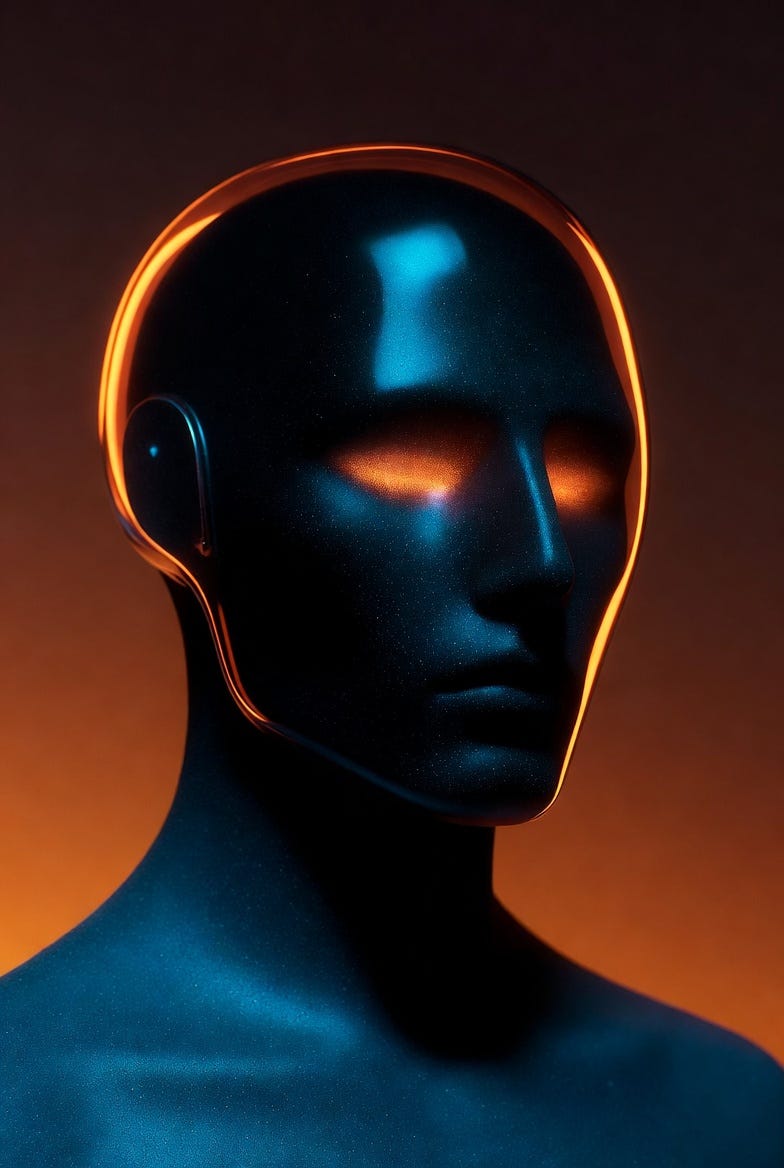
Why We’re Wired to Doom-Scroll
We were not meant to be consuming this much content and be this informed about every global affair. Yet somehow we were tricked into believing that we have to stay up to date with every current event or else we’ll get left behind. I think it’s part of our biology and part of our nature to want to stay informed. Even in ancient civilizations, long before the printing press, we were conditioned to seek gossip because every piece of information you got could have been life-saving.
Oh no, Genoese ships are unloading plague corpses in Messina — bar the ports and head inland before the Black Death spreads! (1347 — killed 30–60% of Europe.) [1]
Oh no, Diocletian’s tearing down churches and executing priests — deny your faith or flee the countryside! (303–311 AD — the bloodiest Roman crackdown on Christians.) [2]
Oh no, the legions are coming back from Parthia covered in pustules — quarantine the camps or the empire collapses! (Antonine Plague, 165–180 AD — likely smallpox, killed 5–10 million.) [3]
Oh no, a black cloud of locusts is blotting out the sky — harvest everything now or abandon the fields! (Ancient locust plagues — one swarm could eat a year’s crops in hours.) [4]
But now we have an overabundance of information, and it is interfering with the clarity of our thoughts. And unfortunately, the news is not here to provide us positivity and optimism. It is here to keep us scared, because that is what keeps people tuned in and this is what keeps these news outlets paid.
But honestly, I had to ask myself this a while ago… Do I really give a single fuck if Israel and Iran are throwing missiles at each other?
Do I really care what’s happening with Russia and Ukraine?
Do I care at all about Venezuela and their dictator president getting snatched up by Trump’s military?
And truthfully, the answer to all of these global events is absolutely fucking not.
Maybe I’m just a heartless selfish capitalist, but truthfully, unless it is affecting my immediate community and family, or it is something that’s going to have an immediate effect on my sovereignty, freedom, or economic purchasing power, then to me, this is all one big distraction. And my attention is better spent on dealing with the immediate problems around me right now that I actually have control over and can fix.
Unless it is affecting my immediate community and family…this is all one big distraction.
Problems of Abundance
Back then, our ancestors faced problems of scarcity. Not enough food, water, or shelter; a constant battle with the elements and nature, invading tribes, and definitely not enough information to help prepare them for all of it.
But now it seems we face the complete opposite problem: problems of abundance.
To quote Naval from one of my favourite podcasts ever made back in 2019 — which oddly enough becomes far more relevant year after year:
Most of modern life, all our diseases are diseases of abundance. Not diseases of scarcity. In old times I may have starved. In old times I may have gotten some sugar and that was a wonderful thing. I should have eaten all the sugar I could have gotten my hands on. If I had gotten a piece of news or gossip that was interesting data that could have helped my life and move me forward. Now
these are all diseases of abundance. We are overexposed to everything. In order to survive modern society, you must retreat from society and become an ascetic. Too much society everywhere you go. Society in your phone, society in your pocket, society in your ears…everyone’s trying to program everybody. The only solution is to turn it off. — Naval Ravikant, The Joe Rogan Experience #1309 (2019) [5]
The Gatekeepers Are Gone
So if you’re like me and lately you’ve been feeling like you’ve been losing your optimism, your childlike sense of wonder; I think maybe it’s time to unplug for a little bit.
But also… reflect on how fucking far we’ve come and how lucky we are to be alive today.
The meta-opportunity nobody talks about: the barrier to entry for almost everything meaningful has collapsed. Starting a business, publishing writing, learning a skill, reaching an audience, accessing capital, building software, creating music — all of these required enormous institutional gatekeeping even one generation ago. The Medici had to fund your art. A record label had to sign you. A publisher had to accept your manuscript. A bank had to approve your loan. Now? The tools are available. The platforms exist. The knowledge is accessible. The cost is a fraction of what it was.
This pessimism and nihilism that modern society is facing is real, but it’s essentially an information processing failure. The negativity bias is biological — we’re wired to pay more attention to threats than to opportunities because that’s what kept us alive on the savanna. [6] The algorithm exploits that bias because attention is the currency. But the actual material reality of being alive in 2026 is staggeringly, almost incomprehensibly good compared to any prior era.
The Stoics would have called this act of doom-scrolling exactly what it is: a failure to see clearly. Seneca wrote about this exact phenomenon; people surrounded by abundance who convince themselves they’re suffering because they’re focused on the wrong things. [7] The cure isn’t less information. It’s better attention. And ironically, the tools for that are also better than they’ve ever been.
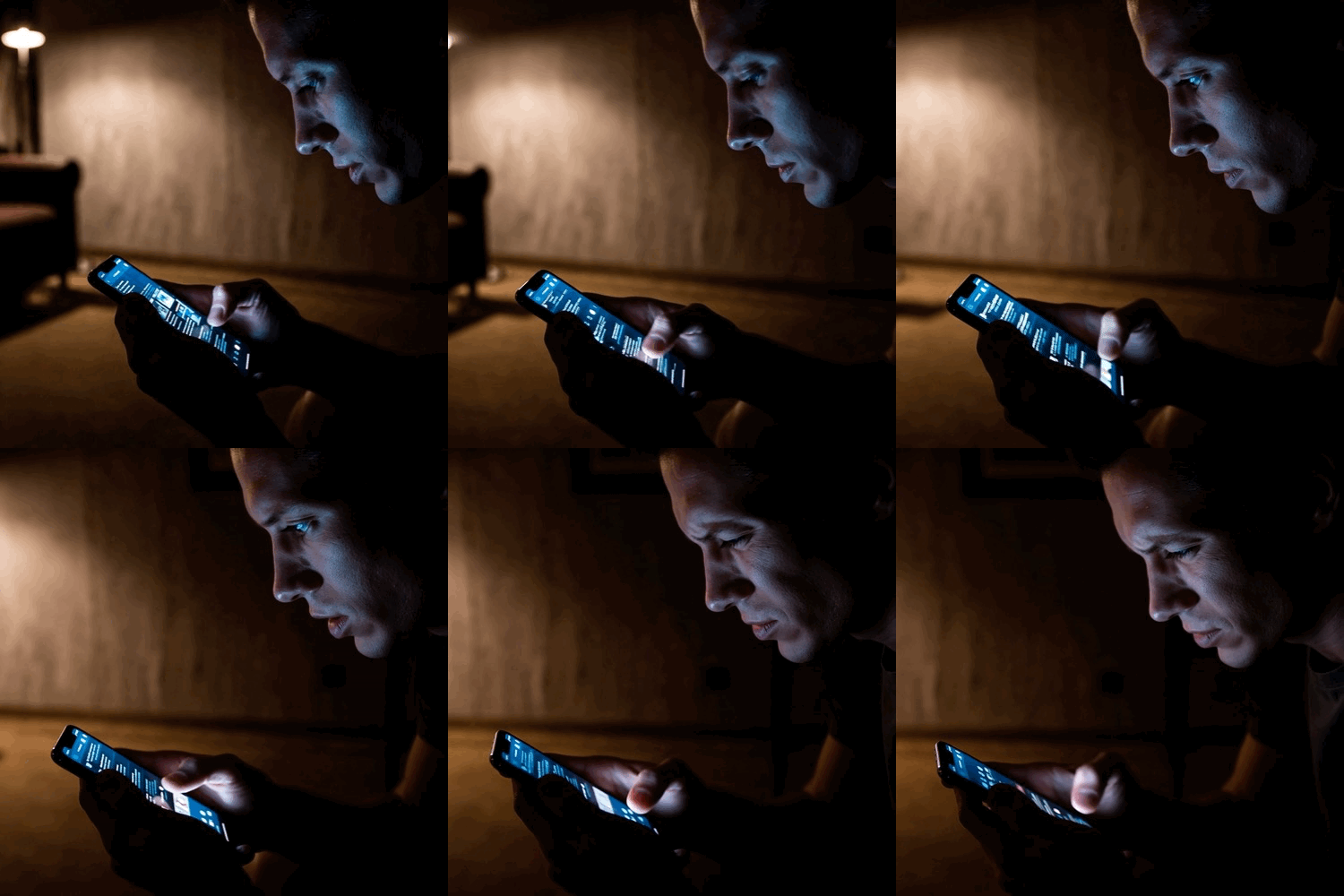
Log Off
I’ve disappeared for more than six months at a time. Each time I’ve come back, the world is almost exactly as it was when I left it. Okay cool, after this last 6 month hiatus there’s now a new tool called Claude Code and apparently we’re all vibing, building cool shit and we’re basically all wizards now. But has it had the cataclysmic effect that everyone online is making it out to seem?
No.
And I would argue, life is even better now with that tool readily available to all of us for $20/month… there is no going back to the old world now.
Life is actually great, but the fucking algorithm made me worried, pessimistic, and anxious… and that is why I logged off. And maybe you should too.
Here’s something I do every now and then, a mental exercise. Whenever I catch myself spiralling into pessimism from too much online consumption, I sit somewhere quiet and actually think about what we have access to right now. We can talk face-to-face with someone on the other side of the planet for free, learn any skill ever documented, and access more knowledge in five minutes than a medieval scholar could gather in a lifetime…all from a device in our pockets. We live in an era where we’re editing genes and curing diseases that wiped out entire civilizations. Pharaohs died from infected teeth. Medieval kings couldn’t heat their own castles. A scholar in 1400 would have spent his entire life trying to access a single manuscript that we can download on our lunch break for $0.99 on Kindle. We are living better than every emperor, prince, and robber baron who ever lived, and we’ve been convinced by an algorithm — designed to keep us angry, anxious, and glued to a screen — that everything is falling apart. It’s not. The doomer porn on our algorithm isn’t reality. It’s a business model. Try it. Step away long enough to see what’s actually in front of you, and you might realize that the problem was never the world. It was the lens.
Sources
[1] Ole J. Benedictow, The Black Death 1346–1353: The Complete History (Boydell Press, 2004). Estimated death toll: 30–60% of Europe’s population.
[2] Timothy D. Barnes, Constantine and Eusebius (Harvard University Press, 1981). On the Diocletianic Persecution, 303–311 AD.
[3] R.J. Littman & M.L. Littman, “Galen and the Antonine Plague,” American Journal of Philology, Vol. 94, No. 3 (1973). Estimated 5–10 million deaths.
[4] Various ancient sources including Pliny the Elder, Natural History, and Old Testament references to locust plagues in the ancient Near East.
[5] Naval Ravikant, The Joe Rogan Experience #1309 (June 2019).
[6] Rozin, P. & Royzman, E.B., “Negativity Bias, Negativity Dominance, and Contagion,” Personality and Social Psychology Review, Vol. 5, No. 4 (2001).
[7] Seneca, Letters from a Stoic (Letter 2 and Letter 78 in particular address the restlessness caused by consuming too much without purpose).